
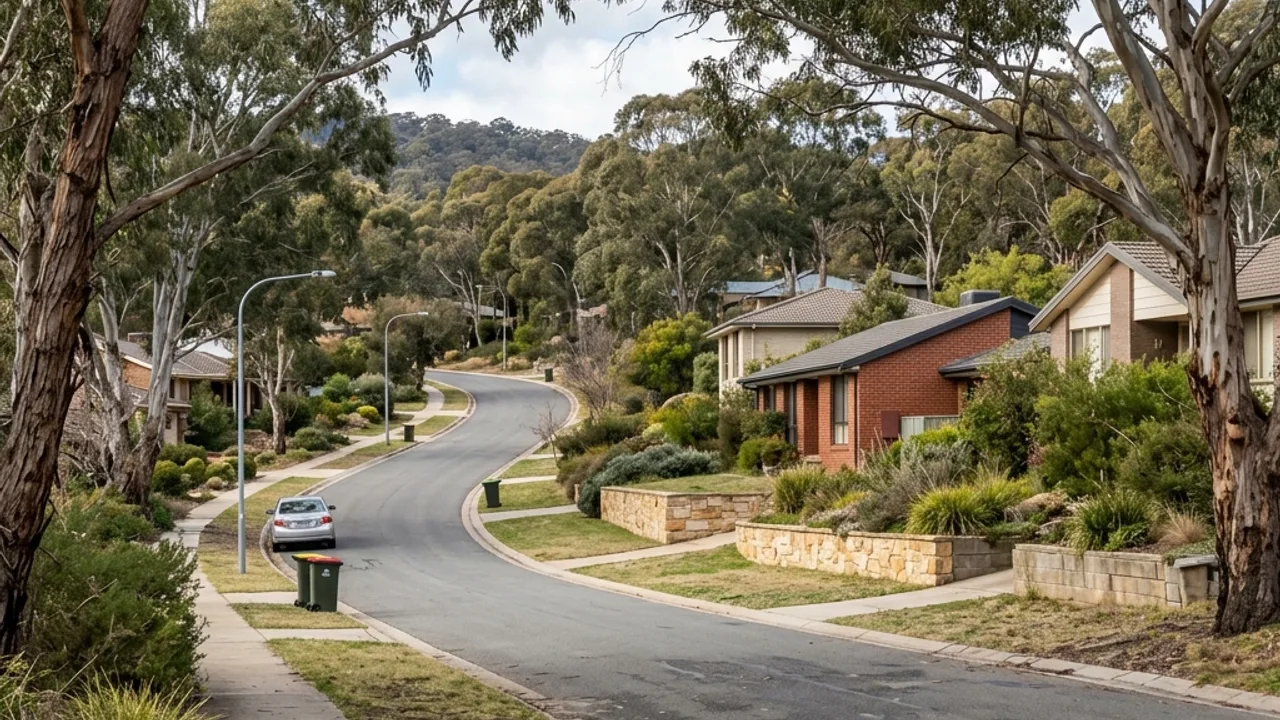
Residential grade relevant to retaining walls in Coombs

Canberra ACT 2611

Retaining walls in Coombs

Newer cut-and-fill properties where original civil levels, easements, service routes and the interface with paths or fencing can affect wall planning.

What the ground in Coombs tends to do

Coombs sits in the Molonglo Valley alongside the river reserve, on lots formed by recent civil earthworks. The finished result reads as tidy and straightforward, which is precisely the trap: the surface tells you very little about footing widths, fill depth or what runs beneath the paving.

Newer properties put paths, services and fencing directly against retained edges more often than older ones do, because the lots are efficiently used. That closeness is the main constraint on method. Before assuming a machine can work along the wall, check what would have to be lifted, protected or removed to make room for it.

Because the ground was placed rather than found, the depth and nature of fill under and behind a wall is a design input that cannot be observed. Where a wall is being added to an existing arrangement, establishing what the original earthworks did is more useful than measuring the visible face precisely.

Access, water and boundaries here

Access from John Gorton Drive, Fred Daly Avenue and Edgeworth Parade is good at the street. The question is how material reaches the wall without damaging finished paving or blocking a shared access route, which on these lots is a genuine constraint rather than a formality. Mark the pits and identify the apparent low point.

Proximity to the Molonglo River Reserve makes the discharge question worth taking seriously. Water leaving a property has to reach a lawful destination through the estate's stormwater system, and creating a new flow path towards a reserve edge is not a substitute for connecting into what is there.

Coombs properties can place paths, services and fencing directly beside retained edges. The clean appearance of a newer lot does not reveal footing width, fill depth or easements below the surface. Mark pits, identify the apparent low point and show how materials would reach the wall without damaging finished paving or blocking a shared access route.

Molonglo River Reserve, Coombs Shops, Charles Weston School locate the wider area, and Wright, Denman Prospect, Holder adjoin it. None of that substitutes for measurements taken on your own block.

Site ledger

Retaining wall Canberra: six facts to record

Use these six observations to describe a retaining wall in Coombs clearly before a provider inspects the property.

  1. 01. Grade

    Record the maximum retained height first, then the wider cut-and-fill relationship it sits inside. One number taken at the tallest point rarely describes a sloping block.

  2. 02. Loads

    Photograph whatever sits above the retained soil: driveways, sheds, buildings, pools, fences, mature trees and any second wall further up the slope.

  3. 03. Water

    Trace where water arrives and where it can lawfully leave. Downpipes, paved runoff, irrigation and the apparent low point matter as much as the structure.

  4. 04. Access

    Measure the narrowest gate, the tightest turn, step heights, overhead clearance and the carry distance from wherever a vehicle can legally stop.

  5. 05. Boundaries

    Confirm the surveyed line rather than the fence. Note neighbouring ground levels, shared structures and anything already built across the boundary.

  6. 06. Approval path

    Treat building approval and development approval as two separate ACT questions. Clearing one exemption test does not clear the other.

Separate observations from assumptions

Measurements and clearly noted unknowns give a provider a reliable starting point. A wet patch is evidence; its source is still an open question. Movement can be visible while the buried post or footing behind it stays unknown until something is opened up.

Keep the two approval checks distinct

ACT building approval and development approval apply different tests. Record height, cut and fill, boundary position and nearby structures, then run each pathway on its own terms instead of assuming one result carries across to the other.

Ask for a traceable scope

A written scope should name the system, the design roles and the excavation, then carry through to spoil, drainage, outlet work, inspections and restoration. Every provisional item should state the condition that would change the method or the programme.

Systems worth comparing

Retaining wall questions in Coombs

How long does a retaining-wall project take?
A small exempt garden wall and an engineered replacement follow different programmes. Design, certifier or approval steps, procurement, access, demolition, weather and inspections can all affect timing. Ask for milestone dates and dependencies rather than one unsupported completion promise.
How do I decide between repair and replacement?
Compare the affected length, member condition, movement pattern, drainage, foundation or post condition, design loads and whether a partial intervention can tie safely into retained work. A written assessment should state what remains, what changes and which risk the repair actually resolves.
What should I send with a retaining-wall enquiry?
Provide the suburb, approximate wall length and highest level change, photos from both ends and the face, known material and age, movement or water symptoms, nearby fences, driveways, buildings and trees, plus access width. This is enough for useful triage without pretending to replace an inspection.
Why does the boundary position matter?
The ACT development-exemption rules give special attention to walls near a front building line and within 1.5 metres of a side or rear boundary. The cut, fill and height relationship must be checked at the actual location, not inferred from the wall's average height.
What if the retaining wall is on or near a shared boundary?
Confirm the surveyed boundary, ownership context, which property changed the ground level, access needs and any fence or structure above the wall before work begins. Responsibility can be fact-specific; obtain appropriate legal or planning advice when neighbours disagree.

Talk to a specialist

Describe your Coombs retaining wall site

Share the details and we will help you take the next step with confidence.