
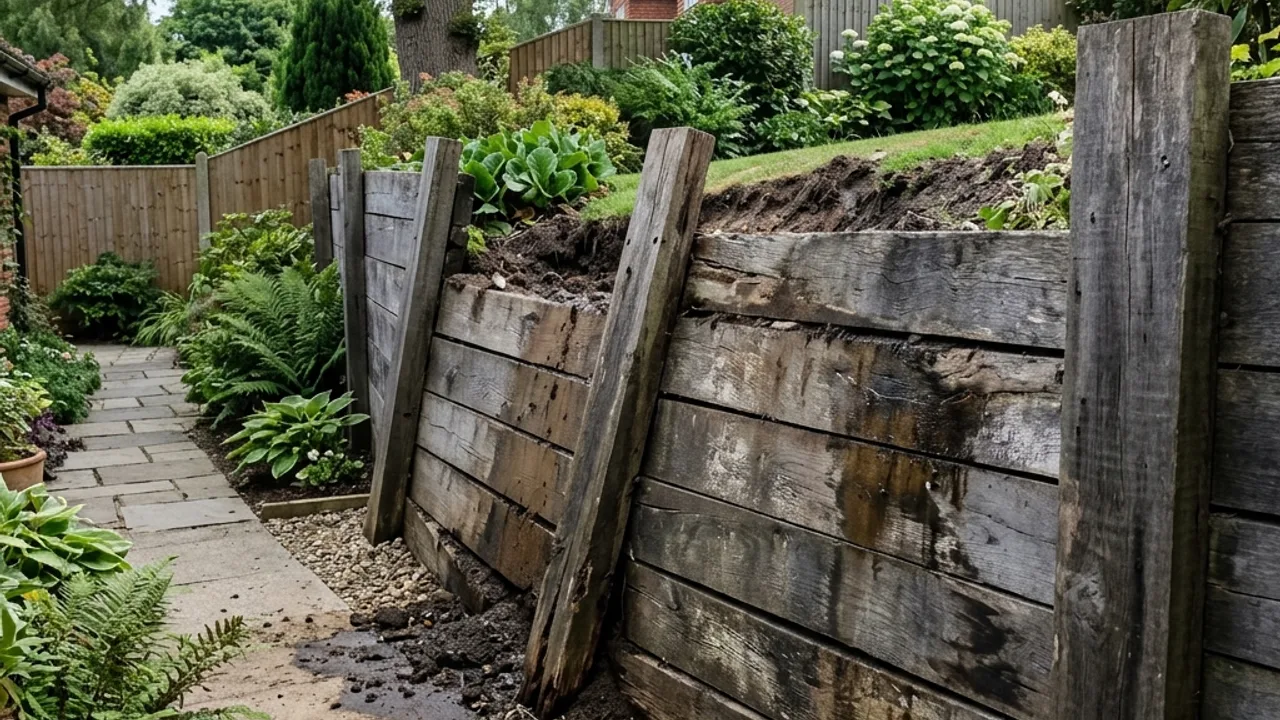
Retaining Wall Repairs & Replacement detail on an Australian residential site

System ledger

Retaining Wall Repairs & Replacement in Canberra

Cause-led assessment of movement, decay, washout and cracking followed by a clear repair, stabilisation or replacement scope.

Where this system may fit

Retaining Wall Repairs & Replacement can be considered when its structural behaviour and construction footprint match the site. Cause-led assessment of movement, decay, washout and cracking followed by a clear repair, stabilisation or replacement scope. Retained height, soil, surcharge and available access should be recorded before appearance or price is used to narrow the field.

For retaining wall repairs & replacement on Canberra properties, check post or footing space, the route for excavation and delivery, and the relationship with nearby fencing, paving, trees and structures. The visible wall face does not show buried embedment or the complete cut-and-fill geometry.

Detail, water and written scope

The proposed elements—movement and failure assessment, drainage and cause remediation scope, partial or full replacement planning—belong in one coordinated scope. Final sizes, reinforcement, drainage and construction details should come from project-specific assessment and any required design.

Drainage for retaining wall repairs & replacement is a path rather than a product list. Collection aggregate, filter separation and a subsoil line need adequate fall and a lawful destination. Surface water, downpipes and irrigation may need separate correction before the trench is closed.

Failure symptoms point to different causes. A single decayed post may allow local movement; a long bulge can indicate pressure or inadequate capacity; soil loss near an outlet can indicate erosion. Mark symptoms on wide photographs and compare older images if available. Record cracks with a ruler for scale, note whether gates still latch and identify any recent landscaping or added loads above the crest. Replacement also needs a temporary-support plan for retained soil, fencing and access before the finished wall takes over. A repair decision should distinguish isolated component damage from movement that affects the wall as a connected system.

Named scope elements

  • Movement and failure assessment
  • Drainage and cause remediation scope
  • Partial or full replacement planning

Site ledger

Retaining wall Canberra: six facts to record

Use these six observations to describe retaining wall repairs & replacement clearly before a provider inspects the property.

For this retaining wall repairs & replacement system, the named scope includes movement and failure assessment, drainage and cause remediation scope, partial or full replacement planning. Compare those items with the available footprint, construction sequence and drainage path before treating the material label as a complete solution.

  1. 01 — Grade

    Start the retaining wall repairs & replacement system notes with the maximum retained height, then show how this wall sits within the broader cut-and-fill relationship.

  2. 02 — Loads

    Nearby loads can change the retaining wall repairs & replacement system design. Photograph driveways, buildings, fences, trees, pools and other walls near the crest.

  3. 03 — Water

    Water can be as important as the retaining wall repairs & replacement system structure. Trace wet zones, downpipes, paved runoff and a possible lawful destination.

  4. 04 — Access

    Access may control the retaining wall repairs & replacement system method. Measure gates, turns, steps, overhead limits and the distance from the street.

  5. 05 — Boundaries

    Boundary conditions around the retaining wall repairs & replacement system need a measured record. Confirm the surveyed line, neighbouring levels, fences and shared structures.

  6. 06 — Approval path

    Check the retaining wall repairs & replacement system against current building-approval guidance, then examine development approval as a separate question.

Separate observations from assumptions

Measurements and clearly noted unknowns give a provider a reliable starting point for the retaining wall repairs & replacement system. A wet patch is evidence while its source remains a question. Movement may be visible, but buried posts or footings still need investigation.

Keep the two approval checks distinct

Canberra building approval and development approval use different tests. Record the retaining wall repairs & replacement system height, cut and fill, boundary position and nearby structures. An exemption under one pathway does not establish an exemption under the other.

Ask for a traceable scope

The written scope for the retaining wall repairs & replacement system should name the system, design roles and excavation. It should also cover spoil, drainage, outlet work, inspections and restoration. Any provisional item should identify the condition that could change the method or programme.

Retaining Wall Repairs & Replacement across Canberra

Local slope and access conditions can shape retaining wall repairs & replacement; each property still needs its own assessment.

Retaining Wall Repairs & Replacement in Red Hill Ridge-edge and established-garden properties where grade, mature vegetation, boundary access and nearby structures need property-specific checks Retaining Wall Repairs & Replacement in Deakin Established homes and diplomatic-area blocks where access protection, existing walls, trees and service routes can shape excavation planning Retaining Wall Repairs & Replacement in Forrest Mature inner-south sites where formal landscapes, boundary detail and protection of established paths and gardens deserve early documentation Retaining Wall Repairs & Replacement in Griffith Around Manuka and Captain Cook Crescent, established frontages can lead to deep rear gardens, making the off-street unloading point and the full side passage important parts of the wall plan Retaining Wall Repairs & Replacement in Narrabundah Varied residential grades and established gardens where runoff routes, vegetation, access and the history of an existing wall can change the scope Retaining Wall Repairs & Replacement in Ainslie Homes near the Mount Ainslie edge where slope, rock, mature trees, existing terraces and constrained access need site evidence rather than suburb assumptions Retaining Wall Repairs & Replacement in O'Connor Inner-north blocks with established gardens and ridge influence where access width, tree roots, services and neighbouring structures should be mapped Retaining Wall Repairs & Replacement in Kaleen Established northern homes where long boundaries, garden terraces and access beside existing buildings can make staging and spoil removal important Retaining Wall Repairs & Replacement in Gungahlin Planned-estate and denser sites where boundary clearances, services, small working areas and coordination with fencing or landscaping matter Retaining Wall Repairs & Replacement in Crace Newer landscaped lots where original cut-and-fill levels, fencing loads, easements and limited side access should be checked against plans and site conditions Retaining Wall Repairs & Replacement in Wright Molonglo Valley sites where recent earthworks, stepped boundaries and adjacent development make records of fill, drainage and design loads useful Retaining Wall Repairs & Replacement in Coombs Newer cut-and-fill properties where original civil levels, easements, service routes and the interface with paths or fencing can affect wall planning Retaining Wall Repairs & Replacement in Weston Established Weston Creek blocks where older walls, ridge-adjacent grades, garden access and drainage outlets should be assessed together Retaining Wall Repairs & Replacement in Chapman Sloping, vegetation-rich properties near Cooleman Ridge where access, fire-sensitive landscaping, water paths and mature roots warrant careful scoping Retaining Wall Repairs & Replacement in Kambah Large and varied Tuggeranong blocks where long walls, changing grades, established trees and distance from street access can materially affect the method

See all locations ->

Retaining Wall Repairs & Replacement questions

What site details help with retaining wall repairs replacement?
A useful enquiry about retaining wall repairs replacement starts with the wall length, maximum retained height and broad slope. Wide photographs of the repair scope should also show nearby loads, boundaries, wet areas and access.
How should drainage be checked for retaining wall repairs replacement?
Drainage around the repair scope should be reviewed after rain. Identify downpipes, paved runoff and the low point, then ask how filter separation, pipe fall and any collection line serving the repair scope reach a workable outlet.
Could retaining wall repairs replacement need engineering?
The repair scope may need engineering where load, movement, height, nearby structures or uncertain ground are relevant. A project-specific assessment should confirm the repair scope path.
What access notes improve an enquiry about retaining wall repairs replacement?
Measure access to the repair scope at the narrowest gate and photograph steps, turns, eaves and visible services. Explain how soil and materials for the repair scope could move between the parking point and the wall.
How should quotations for retaining wall repairs replacement be compared?
When comparing quotations for the repair scope, check design responsibility, excavation, spoil and drainage. A complete repair scope scope should also separate approvals, temporary support and restoration from provisional allowances.

Talk to a specialist

Describe your retaining wall repairs & replacement site

Share the details and we will help you take the next step with confidence.